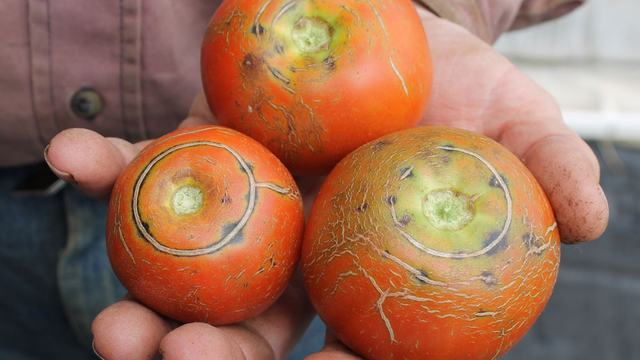
There is nothing more disappointing than walking into the garden and finding beautiful, ripe tomatoes with large cracks running across the fruit. Tomato cracking is a common problem for home gardeners, but the good news is that it is usually not caused by a disease. Instead, cracking is most often the result of rapid changes in water availability and growing conditions.
Tomato fruit cracking occurs when the inside of the tomato grows faster than the skin can expand. When tomatoes receive a sudden increase in water after a period of dry conditions, the plant quickly pulls in water, causing the fruit to swell. If the tomato skin cannot stretch enough to accommodate this growth, it splits.
Several environmental conditions can make tomatoes more likely to split:
- Inconsistent watering: Allowing plants to become very dry and then giving them large amounts of water can lead to rapid fruit expansion.
- Heavy rainfall: A sudden summer storm after a dry spell can cause tomatoes to take up more water than the skin can handle.
- High temperatures: Excessive heat can slow skin development and make fruit more vulnerable to cracking.
- Variety selection: Some tomato varieties have thinner skins and are naturally more prone to cracking.
- Rapid growth: Tomatoes that are growing quickly, especially during warm, humid weather, may split more easily.
While gardeners cannot control the weather, there are several steps that can help reduce cracking:
- Maintain consistent soil moisture. Water tomatoes regularly, especially during hot and dry periods. Deep watering encourages strong root growth and helps prevent large swings in soil moisture.
- Use mulch around plants. Applying 2–3 inches of organic mulch, such as straw, shredded leaves, or pine straw, helps conserve soil moisture and keeps soil temperatures more stable.
- Avoid overwatering after dry periods. If your garden has been dry, slowly increase watering rather than saturating plants all at once.
- Harvest tomatoes promptly. Tomatoes that are beginning to ripen are more likely to crack during periods of heavy rain. Picking tomatoes as they start to show color and allowing them to finish ripening indoors can help prevent losses.
Tomatoes with small cracks can still be harvested and eaten as long as there are no signs of rot, mold, or insects. Cracked areas should be trimmed away before eating. Tomatoes with deep cracks that have been exposed to moisture for long periods may spoil quickly and should be discarded. Tomato cracking is a frustrating but common garden issue. By keeping plants evenly watered, adding mulch, and selecting appropriate varieties, gardeners can reduce cracking and enjoy a healthier tomato harvest throughout the growing season.